 Save
Save There's something about the smell of beef hitting hot oil that instantly transports me back to my grandmother's kitchen on a Sunday afternoon. She'd stand at that old stove with absolute confidence, breading chicken fried steak like she was creating edible gold, and the kitchen would fill with this warm, savory cloud. I burned my first batch spectacularly—oil splashing everywhere, breadcrumb chaos—but watching her laugh and hand me the spatula anyway taught me that this dish isn't about perfection, it's about the comfort you're creating for people you love.
I made this for a group of friends who'd never experienced proper chicken fried steak, and I watched their faces light up with that first bite. One friend actually said it tasted like "a hug you can eat," and honestly, that's exactly what it is. It's the kind of dish that becomes shorthand for home, no matter where you're cooking it.
Ingredients
- Beef cube steaks (4, about 150–180 g each): These are already tenderized at the butcher, which is the secret that makes this whole dish work. Don't skip this step; cube steak saves you from having to pound the meat yourself.
- All-purpose flour (1 cup/125 g): This is your base layer, and mixing it with spices means every steak gets seasoned from the outside in.
- Eggs (2 large) and whole milk (1 cup/240 ml): Combined, they create the perfect sticky layer that helps the breadcrumbs cling to every surface.
- Breadcrumbs (1 cup/60 g): These are what give you that satisfying crunch; panko works beautifully if you want extra texture.
- Garlic powder, onion powder, paprika (1 tsp each), and cayenne pepper (1/2 tsp optional): This spice blend is flexible—I've added smoked paprika, used extra black pepper, even a pinch of Old Bay in a moment of experimentation.
- Salt (1 tsp) and black pepper (1/2 tsp): Season generously; these steaks need assertive seasoning to sing.
- Vegetable oil, for frying: Use enough to create a shallow bath; this isn't deep frying, but there should be enough to brown the steaks evenly.
- Pan drippings or unsalted butter (3 tbsp): Those browned bits left in the skillet are liquid gold for your gravy.
- Whole milk (2 cups/480 ml for gravy): The creaminess is what makes this sauce addictive; don't skimp on milk or the gravy will be thin and sad.
- Fresh parsley (2 tbsp, optional): A sprinkle at the end adds brightness and makes the dish look like you tried.
Tired of Takeout? 🥡
Get 10 meals you can make faster than delivery arrives. Seriously.
One email. No spam. Unsubscribe anytime.
Instructions
- Dry your steaks completely:
- Pat each cube steak with paper towels until no moisture remains. This is the difference between a crispy crust and a soggy disappointment.
- Organize your breading station:
- Set up three bowls in a row: seasoned flour in the first, beaten eggs mixed with 1/2 cup milk in the second, and breadcrumbs in the third. Having everything ready means you won't second-guess yourself mid-bread.
- Bread each steak with intention:
- Coat each steak in flour, then dip it into the egg mixture, letting excess drip back into the bowl, then press it firmly into the breadcrumbs on both sides. The pressing is crucial—it helps the coating stick during frying.
- Heat your oil to the perfect temperature:
- Pour enough vegetable oil into a large skillet to cover the bottom by about 1 cm (roughly 1/2 inch), then heat over medium-high until a breadcrumb sizzles immediately when dropped in. The oil should smell hot but not scorched.
- Fry in batches without crowding:
- Working in batches if needed (so you don't crowd the pan and drop the temperature), fry the steaks for 3–4 minutes per side until they're deep golden brown and crispy. Transfer each one to a paper towel-lined plate and tent loosely with foil to keep warm.
- Make your gravy in the same skillet:
- Pour off all but about 3 tablespoons of oil, then add flour and whisk constantly for 1 minute to cook out the raw flour taste. The mixture should look thick and pasty—this is called a roux, and it's the foundation of creamy goodness.
- Build the gravy gradually:
- Slowly whisk in the milk, scraping the bottom of the skillet to loosen those caramelized brown bits—they're flavor concentrated. Keep whisking until the mixture thickens, which should take 3–5 minutes.
- Taste and season:
- Add salt and pepper to taste, but remember the gravy will coat your palate, so it needs to taste slightly bold.
- Plate and serve with joy:
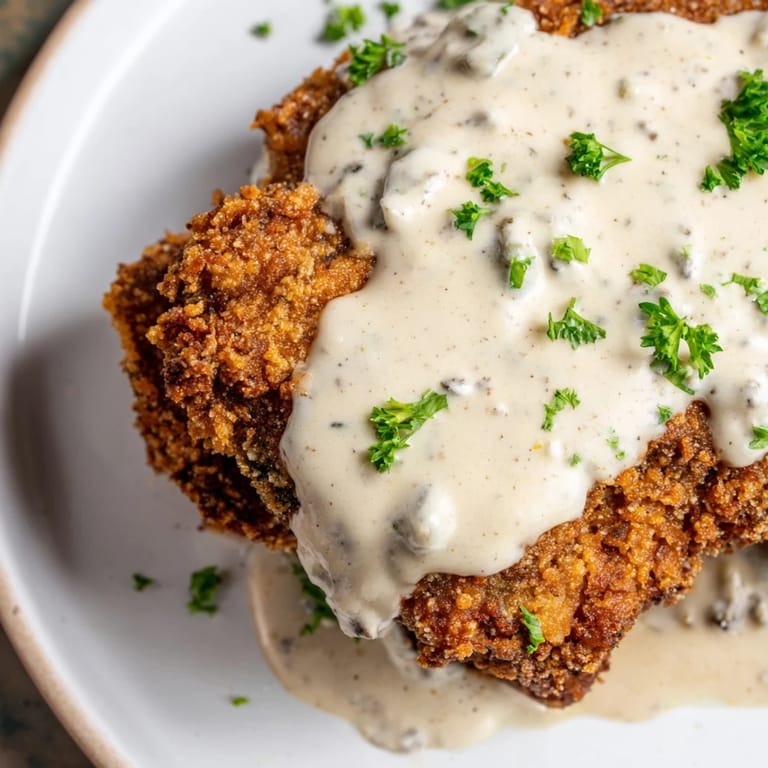
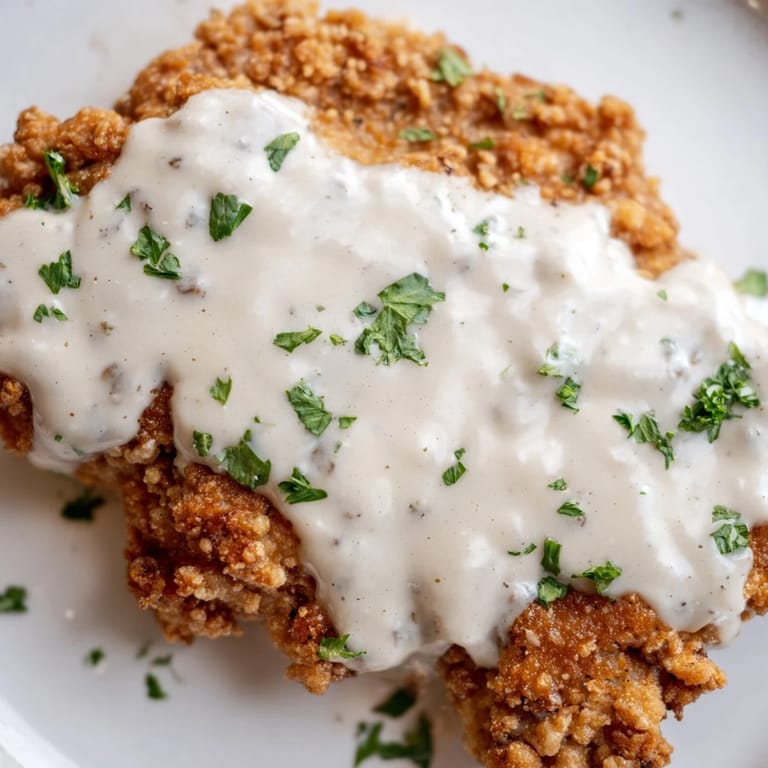
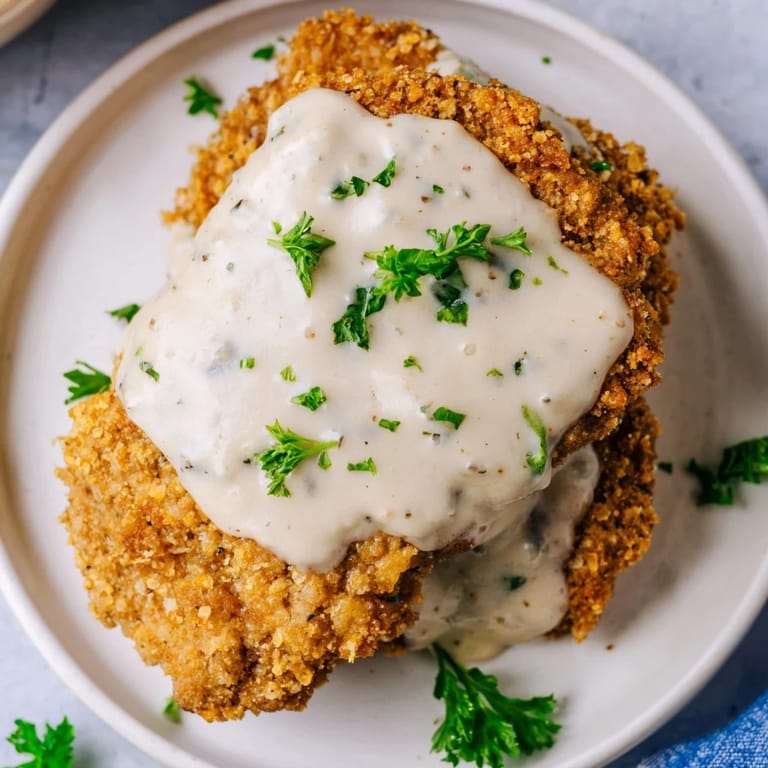
- Place each fried steak on a plate, ladle the warm gravy over the top, and finish with a sprinkle of fresh parsley if you have it.
 Save
Save The first time I served this to my partner, he asked if I'd made it from scratch, and when I said yes, he went quiet and just ate. Later he told me it reminded him of dinners he thought he'd forgotten from his childhood, and that's when I understood: this dish is a time machine made of butter and flour. It's not fancy, but it carries weight.
The Art of the Perfect Crust
The secret to an unforgettable chicken fried steak is understanding that the crust isn't a afterthought—it's the whole point. The contrast between the crispy, golden exterior and the tender meat inside is what makes people come back for more. I learned this the hard way when I tried to rush the breading process, skipping the egg wash. The result was dry and disappointing, and I've never made that mistake again.
Gravy Wisdom
White gravy is one of those sauces that seems simple but reveals itself as truly elegant once you understand it. The key is patience—you can't rush the flour cooking in the fat, and you can't pour in milk all at once. When I make this now, I think of it as meditation: the gentle whisking, the gradual thickening, the moment when it goes from thin liquid to silky coating. This is when you know you've got it right.
Sides and Serving
Chicken fried steak has strong opinions about what should accompany it, and mashed potatoes are the traditional partner for a reason. They act as a canvas for the gravy, and honestly, a plate of this without potatoes feels incomplete. Some people insist on green beans on the side—something to cut through the richness—and that's valid too. My favorite discovery was serving it alongside buttermilk biscuits, which turned the meal into something almost celebratory.
- Mashed potatoes are the classic pairing, and they should be creamy enough to pool the gravy.
- Steamed or sautéed green beans add brightness and help balance the richness of the fried steak and creamy gravy.
- Buttermilk biscuits transform this into dinner party territory if you want to get fancy.
 Save
Save This dish is proof that the most memorable meals don't require fancy ingredients or complicated technique—they just require showing up with care and a hot skillet. Every time I make it, I'm reminded that feeding people well is its own kind of love language.
Recipe FAQs
- → How do I achieve a crispy crust on the steak?
Ensure the steaks are evenly coated with flour, egg mixture, and breadcrumbs. Fry in hot oil (about 1 cm deep) over medium-high heat for 3–4 minutes per side until golden brown.
- → What is the best cut of steak to use?
Cube steaks are ideal as they are tenderized and cook quickly, absorbing the breading and seasonings well.
- → How is the white gravy made?
Use pan drippings or butter, whisk in flour to form a roux, then gradually add milk, cooking until thickened and smooth.
- → Can I add extra spice to the dish?
Yes, adding smoked paprika to the gravy or increasing cayenne in the flour mixture adds smoky and spicy notes.
- → What sides pair well with this dish?
Traditional sides include mashed potatoes or steamed green beans, offering a balanced and comforting meal.
- → How can I adapt this for gluten-free needs?
Substitute all-purpose flour and breadcrumbs with gluten-free alternatives for a safe and tasty version.