 Save
Save There's something about the smell of roasted butternut squash that fills a kitchen with pure comfort—it happened by accident one November afternoon when I was testing oven temperatures and decided to roast the squash while prepping everything else. What started as a time-saving shortcut became the secret to this soup's depth, turning what could have been a simple puree into something with real character and warmth that tastes like autumn in a bowl.
I made this for my neighbor one cold evening when she mentioned feeling under the weather, and watching her face light up when that first spoonful hit was genuinely worth the effort. She asked for the recipe on the spot, then came back the next week with feedback that she'd made it three times already and added chili flakes on my suggestion—suddenly I wasn't just sharing a recipe, I was part of her cooking routine.
Ingredients
- Butternut squash (1 medium, about 1.2 kg): Roasting this first caramelizes the natural sugars and deepens the flavor in ways boiling never can—it's the difference between sweet and truly complex.
- Onion and carrots: These build the savory base and soften into the soup so completely they almost disappear, which is exactly what you want.
- Garlic (2 cloves): Mince it fine so it distributes evenly and doesn't leave harsh little chunks that catch in your throat.
- Vegetable stock (800 ml): Use good quality stock if you can—it's the backbone of the whole pot, and watery stock makes watery soup.
- Coconut milk (200 ml): The full-fat kind gives you that luxurious mouthfeel without needing heavy cream, though swap it for dairy if that's what you have on hand.
- Olive oil (2 tbsp): Use it to coat the squash before roasting and to start your sauté—it carries all the flavors that come next.
- Ground cumin and nutmeg: A whisper of each, not a shout—these warm spices hint at cozy rather than overwhelming.
- Salt and black pepper: Taste as you go because you'll need more than you think, especially after blending.
- Fresh herbs and pumpkin seeds for garnish: These are the final touch that makes people think you spent hours on this when you really didn't.
Tired of Takeout? 🥡
Get 10 meals you can make faster than delivery arrives. Seriously.
One email. No spam. Unsubscribe anytime.
Instructions
- Get your oven ready and prep the squash:
- Preheat to 200°C (400°F) and toss your diced butternut squash with a tablespoon of olive oil, salt, and pepper—coat it evenly so every piece gets golden and caramelized.
- Roast until golden:
- Spread the squash on a baking tray and let it sit in that hot oven for 25 minutes, stirring halfway through if you remember—you're looking for tender pieces with caramelized edges.
- Build your flavor base:
- While the squash roasts, heat the remaining olive oil in a large pot over medium heat and add your chopped onion and carrots—let them soften and turn slightly translucent, about 5 to 7 minutes, stirring occasionally so they cook evenly.
- Wake up the spices:
- Add your minced garlic along with the cumin and nutmeg, and cook for just one minute—that's all you need for the heat to release their fragrance and marry them into the oil.
- Bring it together:
- Once the squash is done roasting, add it to the pot along with your vegetable stock, bring everything to a boil, then reduce the heat and let it simmer gently for 10 minutes so all the flavors get to know each other.
- Transform into velvet:
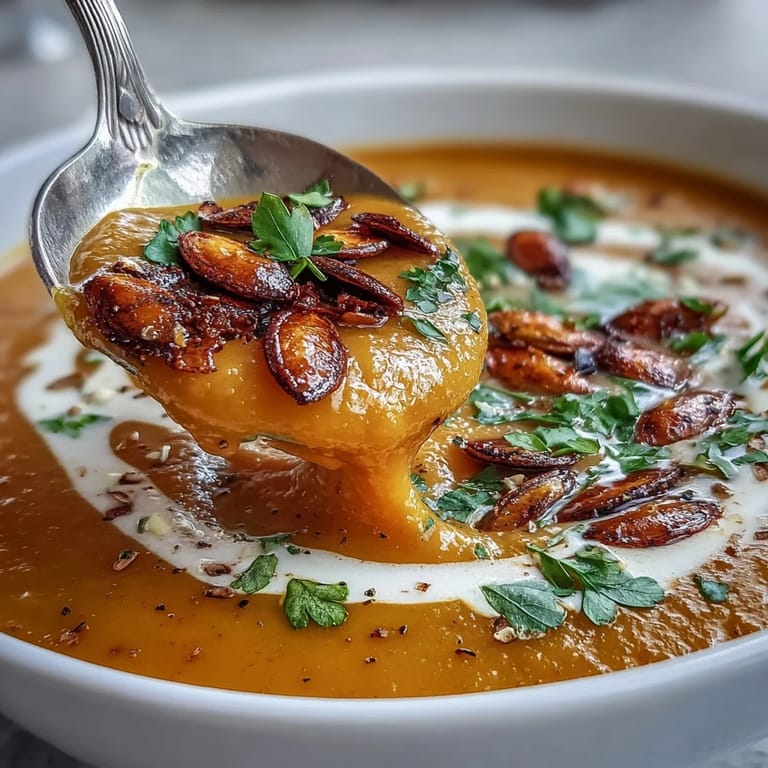
- Remove from heat and use an immersion blender to puree everything until silky smooth—if you're using a regular blender, work in careful batches and don't overfill it or you'll have a hot mess on your hands.
- Finish with richness:
- Stir in your coconut milk, heat it gently without letting it boil, then taste and adjust your salt and pepper because seasoning after blending is always necessary.
- Serve with love:
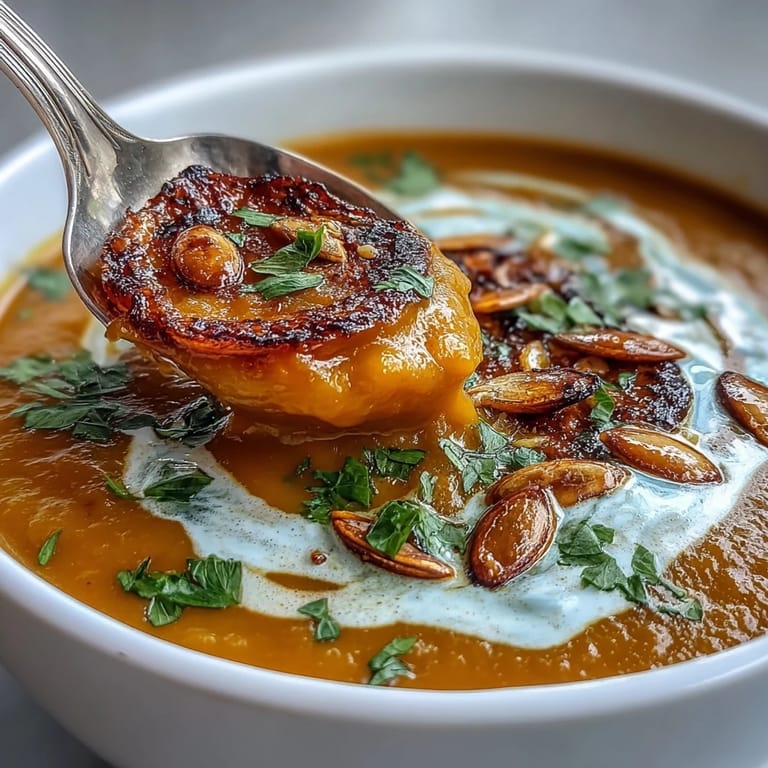
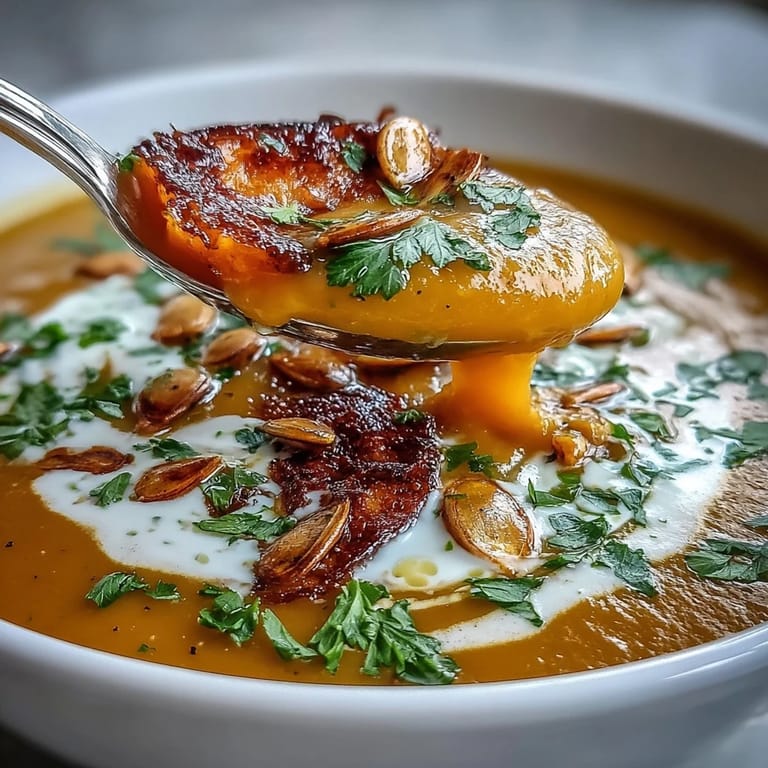
- Ladle into bowls and top with fresh herbs, a scattering of toasted pumpkin seeds, and a thin swirl of coconut milk or cream if the mood strikes.
 Save
Save There's a moment in cooking this soup when you first blend it and watch it go from chunky pot of vegetables to something that looks like silk—that's when I always stop and take a breath because it feels like a small kind of magic. That moment reminds me why I love cooking, even on busy nights when I could just order takeout.
The Secret to Depth
Roasting the squash isn't just a technique, it's the entire difference between this tasting homey and tasting shallow. When you roast instead of boil, the natural sugars caramelize against the hot tray, creating depth that no amount of added seasoning can replicate—it's like the difference between a song and a symphony, and once you taste it this way, you'll never go back.
Texture and Temperature
The immersion blender is your friend here because you can blend right in the pot and control exactly how smooth you want it—some people like it completely silky, others prefer a tiny bit of texture that reminds you of actual vegetables. I've learned that the temperature matters too; gently heat it after blending rather than aggressively bubbling it, because aggressive heat can split the coconut milk and make it look curdled.
Make It Your Own
This soup is a perfect canvas because the butternut squash is naturally sweet and forgiving, so you can play with what you add without ruining it. I've made it with a pinch of chili flakes for heat, stirred in crispy sage leaves at the end, swapped the coconut milk for regular cream on nights when that's what I had, and even added a tablespoon of maple syrup when a batch seemed to need a little something extra.
- Add chili flakes during the spice-blooming step if you want a gentle heat that builds on the back of your palate.
- Toast your own pumpkin seeds in a dry pan for a few minutes before scattering them on top—they taste infinitely better than raw ones.
- Serve alongside crusty bread so people can dunk and get every last drop of flavor from their bowl.
 Save
Save This soup has become my go-to comfort in the colder months, the kind of recipe you make so often it becomes part of your cooking rhythm. There's real comfort in knowing that when the weather turns cold, you have something this good waiting in your kitchen.
Recipe FAQs
- → Why roast the squash first?
Roasting caramelizes the natural sugars in the squash, creating deeper flavor and sweeter notes compared to boiling alone.
- → Can I make this dairy-free?
Yes, use coconut milk as written. It provides natural creaminess without dairy while adding subtle tropical sweetness.
- → How do I achieve the smoothest texture?
Use an immersion blender directly in the pot, or blend in batches with a standard blender. Ensure all vegetables are fully tender before puréeing.
- → Can I freeze this soup?
Absolutely. Cool completely, then freeze in airtight containers for up to 3 months. Thaw overnight and reheat gently, adding liquid if needed.
- → What can I serve alongside?
Crusty bread, crackers, or roasted chickpeas make excellent accompaniments. It also pairs beautifully with a simple green salad.