 Save
Save There's something almost magical about the moment cream hits hot butter and transforms into silk. I discovered my love for fettuccine Alfredo on a random Tuesday when I had nothing in the pantry except pasta, cream, and cheese—and somehow those three humble ingredients became the most comforting thing I'd eaten all month. The simplicity of it shocked me; I'd always assumed something this luxurious required complexity.
I made this for my sister the first time she visited my new apartment, and she sat at my kitchen counter watching the cream turn glossy and golden, saying it smelled like a restaurant kitchen. That smell—butter and Parmesan mingling with steam rising off the pasta—became the unofficial scent of her visits. It's funny how a dish can become a ritual between people.
Ingredients
- Fettuccine (400 g): Use fresh if you can find it, though dried works beautifully too; the ribbon width actually catches the sauce better than thinner pasta shapes.
- Unsalted butter (60 g): This is your base, so quality matters—you'll actually taste it, which means salted butter will throw off the seasoning.
- Heavy cream (250 ml): Don't use half-and-half or milk; the fat content is what makes this sauce cling and stay silky instead of breaking.
- Freshly grated Parmesan cheese (120 g): Pre-grated cheese has anti-caking agents that prevent it from melting smoothly, so the extra minute with a box grater changes everything.
- Garlic clove (1, optional): If you use it, mince it finely so it melts into the sauce rather than adding harsh bits.
- Salt and freshly ground black pepper: Taste as you go; the cheese is already salty, so you need less than you'd think.
- Nutmeg (pinch, optional): This tiny amount lifts the entire dish without announcing itself—it's the ingredient that makes people ask what makes it taste so good.
- Chicken breasts (2, optional): Pound them to even thickness if you have the time; they'll cook more uniformly and stay juicier.
- Olive oil (2 tbsp for chicken): Medium heat works better than high; the chicken will brown gently instead of burning on the outside while staying raw inside.
- Fresh parsley and extra Parmesan for garnish: These final touches are what make it look like you actually tried.
Tired of Takeout? 🥡
Get 10 meals you can make faster than delivery arrives. Seriously.
One email. No spam. Unsubscribe anytime.
Instructions
- Boil the pasta with intention:
- Salt your water like the sea—it's the only chance to season the pasta itself. As the fettuccine cooks, watch for that moment when it goes from chalky to tender, then fish out a strand to taste it; it should have just a whisper of resistance when you bite.
- Prepare the chicken (if using):
- Season generously and let the chicken hit a hot, oiled skillet without moving it around; those golden-brown spots are flavor. Let it rest after cooking so the juices redistribute.
- Start the sauce base:
- Melt the butter on medium-low heat—too hot and it browns and turns nutty, which is delicious but different from what we're going for here. If using garlic, let it perfume the butter for just 30 seconds.
- Add the cream carefully:
- Pour it in and stir constantly; you're looking for tiny bubbles to form at the edges, not a rolling boil. This gentle simmer prevents the cream from breaking.
- Whisk in the cheese:
- Lower the heat even more, then add the Parmesan a handful at a time, whisking between additions so each batch melts completely. If you dump it all in at once, you'll get a grainy sauce that never quite smooths out.
- Combine pasta and sauce:
- Toss the hot drained pasta directly into the sauce; the residual heat helps everything come together. If it looks too thick, add pasta water by the tablespoon until it reaches that glossy, coating consistency.
- Plate and finish:
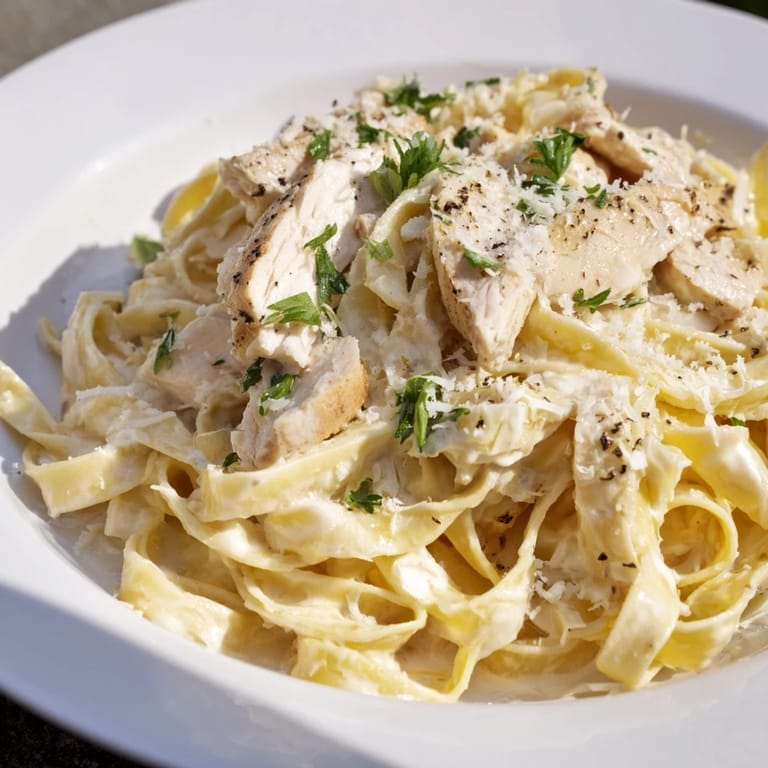
- Do this quickly while everything is still hot; the sauce sets as it cools. Top with chicken if you're using it, then scatter parsley and a final shower of Parmesan.
 Save
Save I burned a batch once by getting impatient and turning the heat up, and the cream separated into a greasy mess. That failure taught me more than any successful attempt—it showed me that this sauce demands presence and gentleness, not speed. Now when I make it, that memory keeps my hand steady on the heat dial.
The Magic of Pasta Water
That cup of starchy water you reserve isn't an afterthought; it's the secret fix when your sauce feels too thick or too one-note. Adding it a splash at a time loosens everything and helps the cheese coat the pasta evenly instead of clumping. The starch acts like a gentle thickener that also helps bind the sauce to the noodles, so those creamy strands actually stay creamy on the plate and don't separate by the time you sit down.
When to Skip the Chicken
Not every version of this dish needs protein, and there's freedom in accepting that. Some nights I make it with nothing but the pasta and sauce because I want to taste only that dialogue between cream and Parmesan. Those simple versions taught me what this dish actually is at its core, and sometimes the truest expression is the quietest one.
Small Touches That Shift Everything
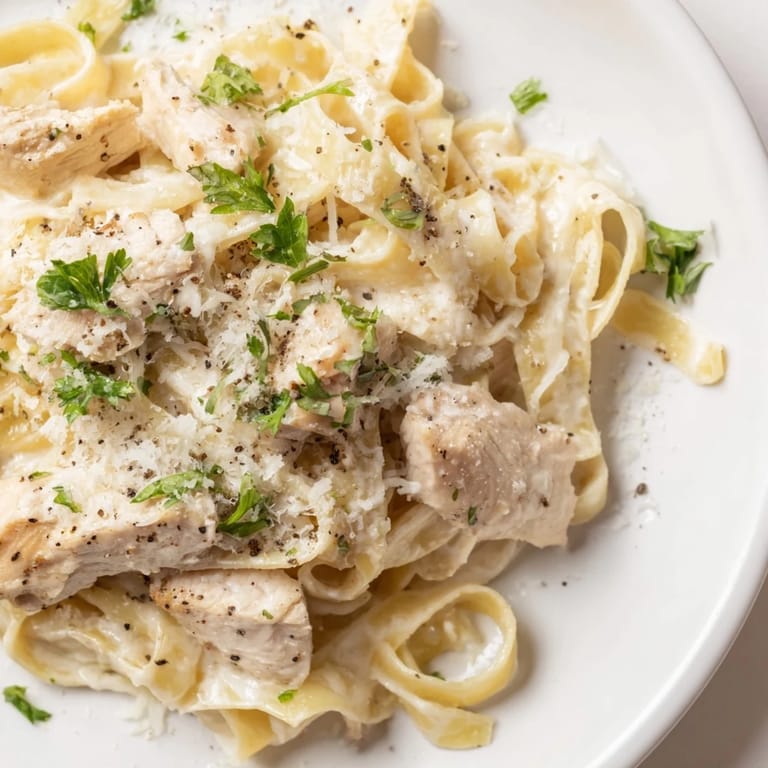
The final plate is where instinct meets technique. A crack of fresh black pepper looks intentional, a handful of torn parsley adds brightness against the yellow, and an extra grating of cheese gives it that restaurant finish. These last details take 10 seconds but signal that you cared enough to think beyond just stirring everything together.
- Fresh nutmeg grated at the last second adds a warm spice note that lingers on the tongue.
- If the sauce seems thin, let it rest off heat for a minute and it will thicken slightly as it cools.
- Serve on warm plates so the pasta doesn't cool down the moment it arrives at the table.
 Save
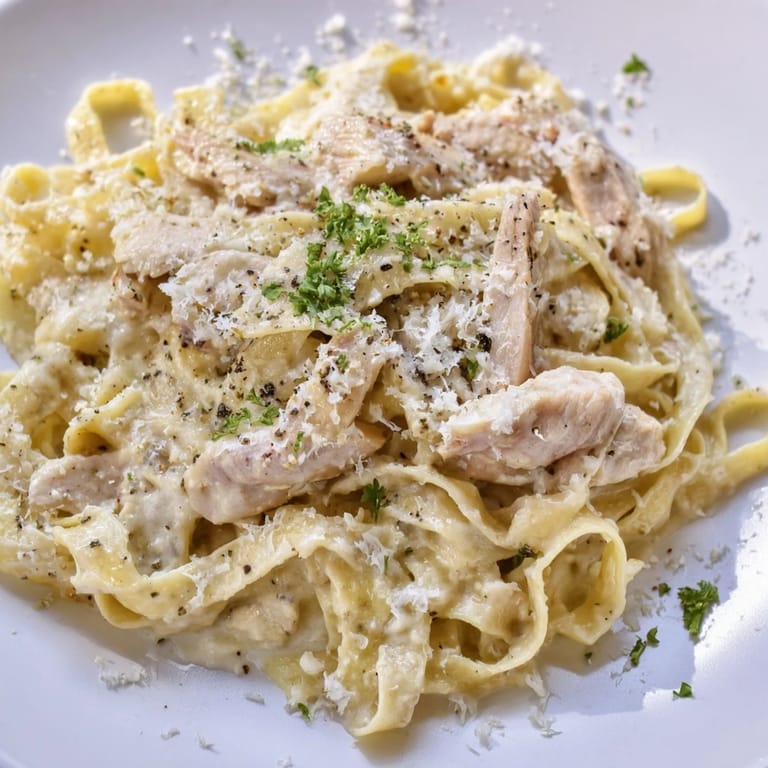
Save Fettuccine Alfredo is proof that restraint in cooking can create something greater than the sum of its parts. Make this when you need to remember that good food doesn't require long ingredient lists or hours in the kitchen—sometimes it just needs butter, cream, cheese, and your full attention.
Recipe FAQs
- → How can I achieve a creamy sauce without curdling?
Simmer the cream gently over low heat and add the cheese gradually while stirring constantly to create a smooth, creamy sauce.
- → Can I use a different cheese than Parmesan?
Yes, pecorino Romano offers a sharper flavor, making an excellent alternative to Parmesan in this sauce.
- → What is the best way to cook fettuccine for this dish?
Cook fettuccine until just al dente in salted boiling water, then drain and reserve some pasta water to adjust sauce consistency if needed.
- → How can I add more flavor variations to the sauce?
Incorporate sautéed mushrooms or peas for added texture and flavor, complementing the creamy base beautifully.
- → Is this dish suitable for vegetarians?
Yes, when prepared without the optional chicken, it is vegetarian-friendly, relying on butter, cream, and cheese for richness.
- → What wine pairs well with this rich dish?
A crisp Italian white wine such as Pinot Grigio balances the creamy sauce’s richness with fresh acidity.