 Save
Save There's something almost magical about watching someone's face light up when they taste truly fresh vegetables for the first time in weeks. My neighbor stopped by on a sweltering afternoon, and I'd thrown together whatever green things were still crisp in my crisper drawer—and she asked for the recipe before she'd even finished the bowl. That's when I realized this salad isn't just about being healthy; it's about that moment when food tastes the way food should taste, bright and alive and exactly what your body was craving.
I started making this regularly when I realized I was spending money on salads that tasted like disappointment and plastic packaging. Making it at home, I could taste the difference immediately—the snap of fresh cucumber, the peppery bite of arugula, the way homemade vinaigrette actually clings to the leaves instead of pooling at the bottom. My kids, who normally push greens around their plates with suspicious forks, started actually finishing theirs.
Ingredients
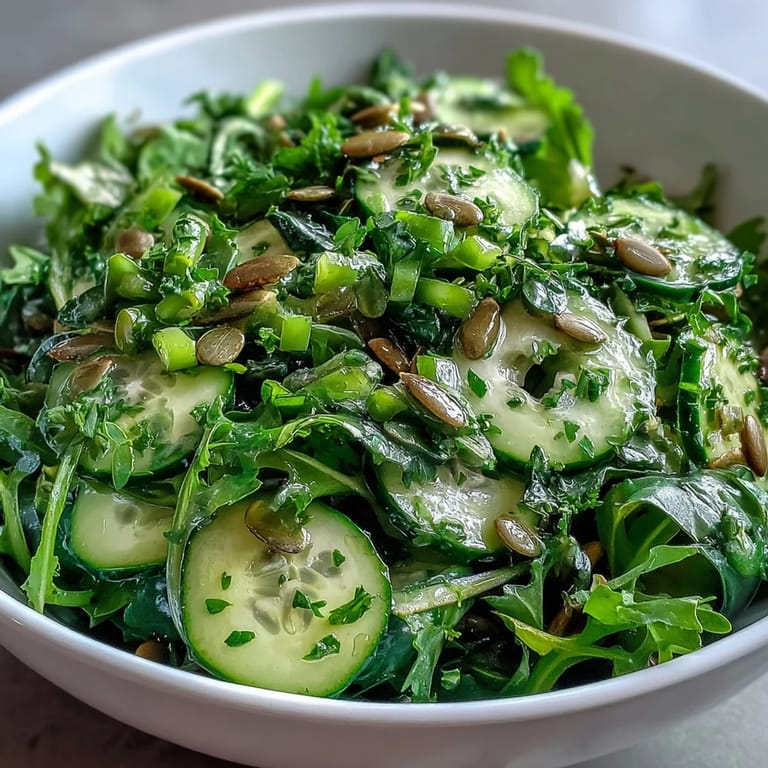
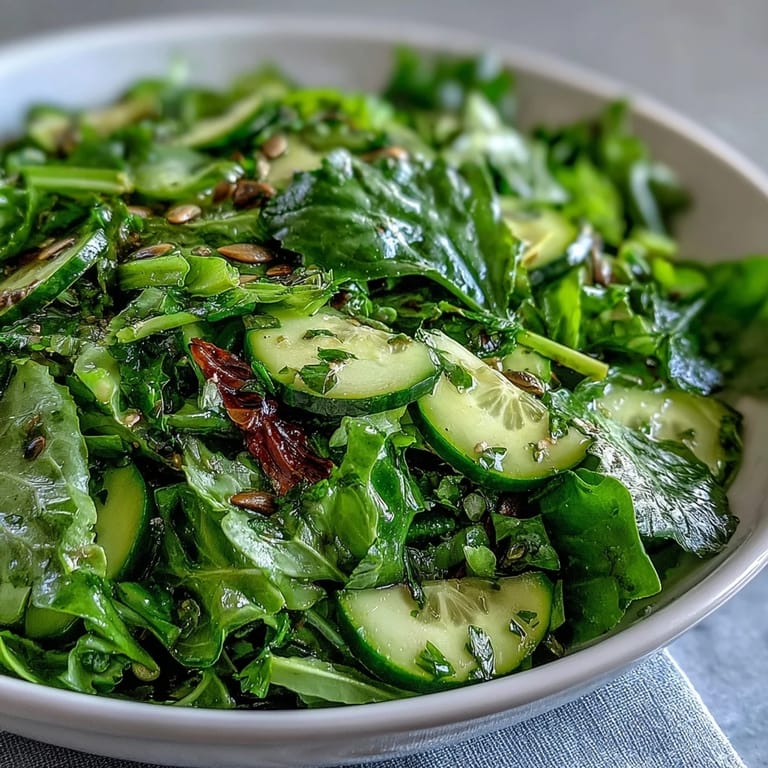
- Mixed baby greens (6 cups): Choose a combination of spinach, arugula, kale, and romaine for interesting flavors and textures—this mixture prevents the monotony of eating just one type of green.
- Cucumber (1, thinly sliced): Buy firm cucumbers and slice them just before serving so they stay hydrating and crisp rather than turning soggy.
- Celery (1 cup, thinly sliced): Often overlooked in salads, celery adds a subtle sweetness and satisfying crunch that anchors everything else.
- Green bell pepper (1 cup, julienned): The natural sweetness of green peppers brightens the whole salad without needing extra sugar anywhere.
- Zucchini (1 cup, thinly sliced): Raw zucchini is tender and mild, and it soaks up the vinaigrette beautifully if you slice it thin.
- Fresh parsley (1/2 cup, chopped): Don't skip this—it adds an herbaceous freshness that makes people ask what the secret ingredient is.
- Extra virgin olive oil (3 tablespoons): This is where quality genuinely matters; a good oil tastes almost grassy and transforms the whole vinaigrette.
- Fresh lemon juice (2 tablespoons): Always use fresh lemon, never bottled; the brightness is incomparable and worth the thirty seconds of squeezing.
- Apple cider vinegar (1 tablespoon): The slight funk of apple cider vinegar adds complexity that makes people wonder why store-bought salad dressings taste so flat.
- Dijon mustard (1 teaspoon): This acts as an emulsifier, helping the oil and acid combine into something silky instead of separated and greasy.
- Sea salt and black pepper (1/2 teaspoon and 1/4 teaspoon): Season generously because these fresh vegetables can handle bold flavors.
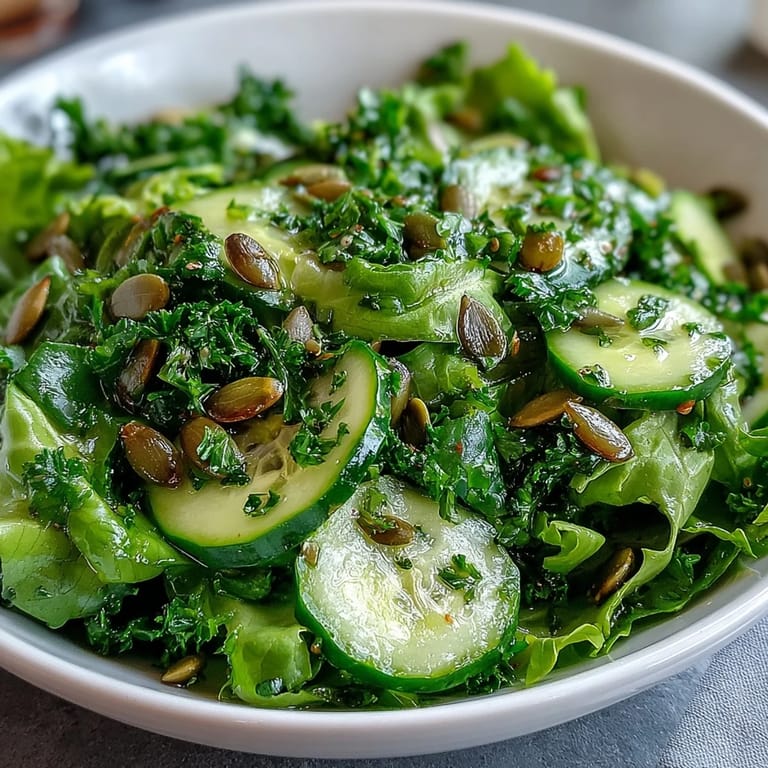
- Pumpkin or sunflower seeds (1/4 cup, optional): If you add these, toast them lightly first for maximum crunch and nutty depth.
Tired of Takeout? 🥡
Get 10 meals you can make faster than delivery arrives. Seriously.
One email. No spam. Unsubscribe anytime.
Instructions
- Gather and slice your vegetables:
- Cut everything into thin, consistent pieces so it all cooks together evenly in terms of texture. Work methodically rather than frantically—this is meditative, actually, and there's something satisfying about watching a cutting board transform from bare to overflowing.
- Combine greens and vegetables:
- Toss everything into your largest bowl, using your hands to combine gently so you don't bruise the delicate leaves. The salad should look abundant and colorful at this point, like you're about to make something special.
- Whisk the vinaigrette:
- In a smaller bowl, add the oil, lemon juice, vinegar, and mustard, then whisk steadily until it looks creamy and emulsified rather than separated. This takes maybe a minute of actual whisking, and you'll see it transform into something that actually clings to a spoon.
- Dress and serve immediately:
- Pour the vinaigrette over everything and toss gently to coat, then serve right away so the greens stay crisp and the whole salad tastes like it was just made—because it was. If you wait too long, the acid starts breaking down the vegetables and everything gets limp, so timing really matters here.
 Save
Save There was a moment last spring when I realized my eight-year-old was voluntarily eating salad without being asked, and it hit me that this was no longer about nutrition or being healthy—it had become genuinely delicious food that she actually wanted. That's when food transcends its purpose and becomes a small kind of victory.
When to Make This
This salad shines in warm months when vegetables taste their absolute best and you're tired of heating up your kitchen. It's perfect for meal-prep lunches because the components stay fresh separately—you can assemble it in the morning if you keep the vinaigrette in a little jar and dress it only when you're ready to eat. I make enormous batches whenever I'm hosting people because it feels generous and looks stunning, and honestly, people always eat more vegetables when they're this fresh and actually taste good.
Building Your Own Variations
The beauty of this formula is that you can swap vegetables based on what's fresh or what you have—thinly sliced radishes add peppery bite, shredded carrots bring sweetness, microgreens add elegance if you're feeling fancy. The vinaigrette stays the same, which means once you've made it once, you understand the ratio and can improvise with confidence. I've made versions with mint instead of parsley, lime instead of lemon, and each time it feels like a completely different salad even though the core idea remains exactly the same.
Dressing Strategy and Storage
The vinaigrette keeps beautifully for about five days in a jar in the refrigerator, so you can make a batch at the beginning of the week and use it for multiple salads without the dressing ever tasting dull or repetitive. I learned this accidentally when I made a double batch and forgot about the extra in the back of the fridge—and then realized I could grab it any evening and assemble a fresh salad in minutes. The longer the vinaigrette sits, the more the flavors meld together, which actually makes it taste even better.
- Store vinaigrette separately from greens always, or your salad becomes sad and wilted.
- If you do add avocado or other delicate ingredients, introduce them just before serving so they don't oxidize or get mashed.
- This salad pairs beautifully with grilled fish, roasted chicken, or even a simple grain if you're making it a complete meal.
 Save
Save This salad has become my go-to proof that healthy eating doesn't require sacrifice or complicated techniques. It's just about starting with ingredients that are genuinely fresh and treating them with respect.
Recipe FAQs
- → How long does this salad stay fresh?
Best enjoyed immediately after dressing. For meal prep, store vegetables and vinaigrette separately—combine just before serving to maintain crisp texture.
- → Can I make substitutions?
Absolutely. Swap mixed greens for your preferred varieties, add sliced avocado for creaminess, or try fresh mint instead of parsley. Lime juice works beautifully in place of lemon.
- → Is this suitable for meal prep?
Yes. Wash and chop vegetables in advance, storing them in airtight containers. Keep the vinaigrette separate and toss portions just before eating throughout the week.
- → What proteins pair well?
Grilled fish or chicken complement the fresh flavors beautifully. For plant-based protein, add chickpeas, hemp seeds, or grilled tofu while keeping the dish vegan.
- → How do I adjust the vinaigrette?
Taste and adjust acidity or seasoning to preference. More lemon juice adds brightness, while extra olive oil creates richer mouthfeel. The mustard helps emulsify for silky texture.