 Save
Save There's something quietly magical about assembling a grain bowl on a Tuesday afternoon when you've got nothing but time and a farmers market haul sitting on your counter. I discovered this particular combination while standing in my kitchen, staring at a bunch of spinach that needed using before it wilted, and realizing that the best meals don't always come from following someone else's rules—they come from working with what you have and trusting your instincts. This bowl emerged from that kind of improvisation, and it's since become the recipe I turn to when I want something nourishing without the fuss.
I made this for my sister during her first week back from a stint living abroad, and she sat at my kitchen table eating directly from the bowl while we caught up, barely pausing to breathe between bites and words. That moment—her closing her eyes after the first forkful, that small satisfied nod—told me everything I needed to know about whether this recipe had staying power.
Ingredients
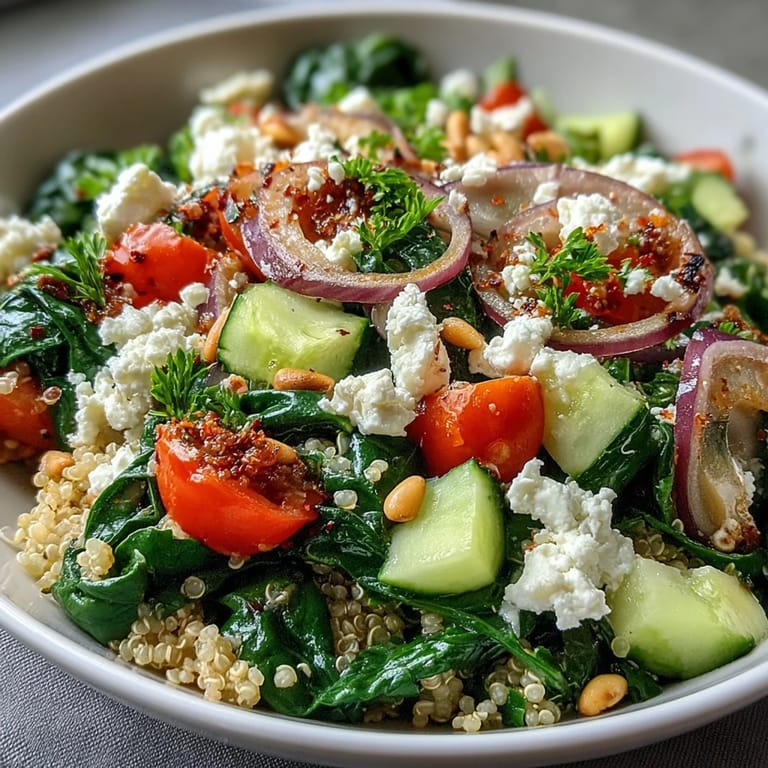
- Quinoa or brown rice: The foundation of everything, and honestly, whichever grain you choose will work beautifully—quinoa cooks faster and has a pleasant nuttiness, while brown rice gives you a earthier, more substantial bite.
- Fresh spinach: Buy the kind that's loosely packed, not compressed into those dense bags, because it wilts down more gracefully and tastes fresher once it hits the skillet.
- Cherry tomatoes: Halving them helps release their juices into the finished bowl, creating tiny pockets of brightness that make each bite feel intentional.
- Cucumber: The cool crunch here is non-negotiable—it's your textural counterpoint to everything soft and sautéed.
- Red bell pepper: Diced fine enough that you get sweetness in every forkful, not just the occasional big chunk.
- Red onion: Slice it thin and let its sharpness fade slightly while you're finishing other components; it mellows and adds surprising depth.
- Feta cheese: The creamy, salty anchor that makes everything else taste more like itself—don't skimp on quality here, and crumble it just before serving so it stays distinct.
- Extra-virgin olive oil: This isn't the place for cooking oil; use something you'd happily drink, because you'll taste every note.
- Fresh lemon juice: Bottled works in a pinch, but fresh lemon transformed this from good to genuinely craveable.
- Honey or maple syrup: A teaspoon sounds small, but it rounds out the sharpness of the lemon and creates balance that feels almost effortless.
- Garlic: One clove minced fine into the dressing is enough to whisper rather than shout.
- Pine nuts or sunflower seeds: Toasted, scattered, optional but honestly the detail that makes people ask for the recipe.
Tired of Takeout? 🥡
Get 10 meals you can make faster than delivery arrives. Seriously.
One email. No spam. Unsubscribe anytime.
Instructions
- Cook your chosen grain:
- Bring your broth to a rolling boil, stir in the grain, then drop the heat down and cover it so the steam does the work—you'll know it's done when the liquid disappears and you can fluff it with a fork without it turning to mush.
- Wilt the spinach gently:
- Heat oil in a wide skillet over medium flame, add your chopped spinach, and give it just two to three minutes—you want it softened and dark green, not cooked into submission.
- Whisk your dressing together:
- In a small bowl, combine the oil, lemon juice, honey, minced garlic, and a generous pinch of salt and pepper, whisking until the honey dissolves and the mixture tastes bright and alive on your tongue.
- Build your bowls thoughtfully:
- Divide the warm grain among four bowls as your base, then layer the sautéed spinach, followed by the raw vegetables arranged however pleases you—there's no right way, only what feels balanced to your eye.
- Add the feta crown:
- Scatter the crumbled cheese across the top of each bowl while the grains are still warm so it softens slightly at the edges.
- Dress and garnish:
- Drizzle the dressing evenly across each bowl, then top with toasted nuts and fresh parsley if you're feeling fancy, and serve immediately or let it sit until it cools to room temperature.
 Save
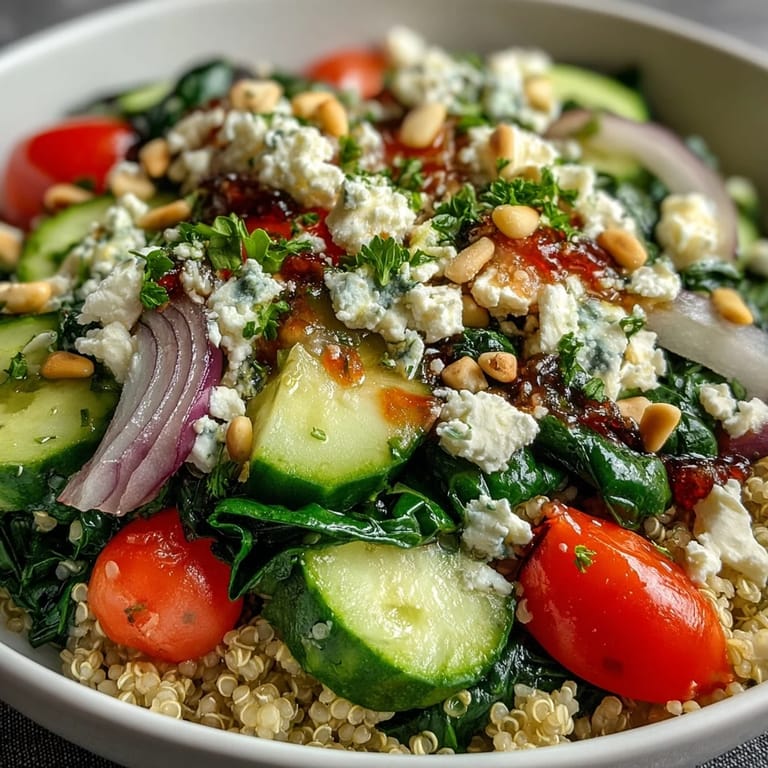
Save There was a moment last spring when I realized I'd made this bowl three times in one week without thinking about it—it had become the thing I reached for when my body knew exactly what it needed, no deliberation required. That's when a recipe stops being a recipe and becomes a practice.
When to Serve Warm vs. Cold
I've learned that the temperature you choose shifts the entire experience—warm bowls feel like comfort food, especially as evenings cool down, while room-temperature versions are perfect for warmer days or when you're packing lunch to take somewhere. The feta tastes creamier when warm, and the greens seem to sweeten slightly as they cool, so you're really choosing which qualities you want to highlight. Neither version is more correct; it's about what your mood demands.
The Art of Grain Selection
I've experimented enough with this bowl to know that while quinoa and brown rice are obvious choices, I've had just as much success with farro, which adds a subtle chewiness, and even with a quick couscous when time is really short. Each grain carries its own flavor story—some are nutty and substantial, others are light and almost delicate—and the vegetables stay constant while the grain becomes the variable that changes the feeling of the whole dish. The magic is in discovering which grain makes you happiest and returning to it.
Why This Works for Any Occasion
What makes this bowl endlessly useful is its flexibility without losing its identity—you can make it vegetarian as written, add grilled chicken or roasted chickpeas for protein, swap spinach for arugula if you want peppery instead of mild, and the bones of the dish remain solid. I've served it at casual lunches with friends, packed it for picnics, even offered it to my partner when he came home from work and didn't have energy to decide what to eat. It's the kind of meal that doesn't demand attention but rewards it quietly.
- If you're cooking for someone with dietary restrictions, this bowl is naturally gluten-free if you use certified grains, and easily vegan if you swap the feta for marinated tofu.
- Make a double batch of dressing and store it in a glass jar in the fridge—it stays fresh for about a week and works on almost any salad you throw at it.
- Taste the dressing before drizzling it on the bowls and adjust the lemon or honey to match your preferences in that exact moment.
 Save
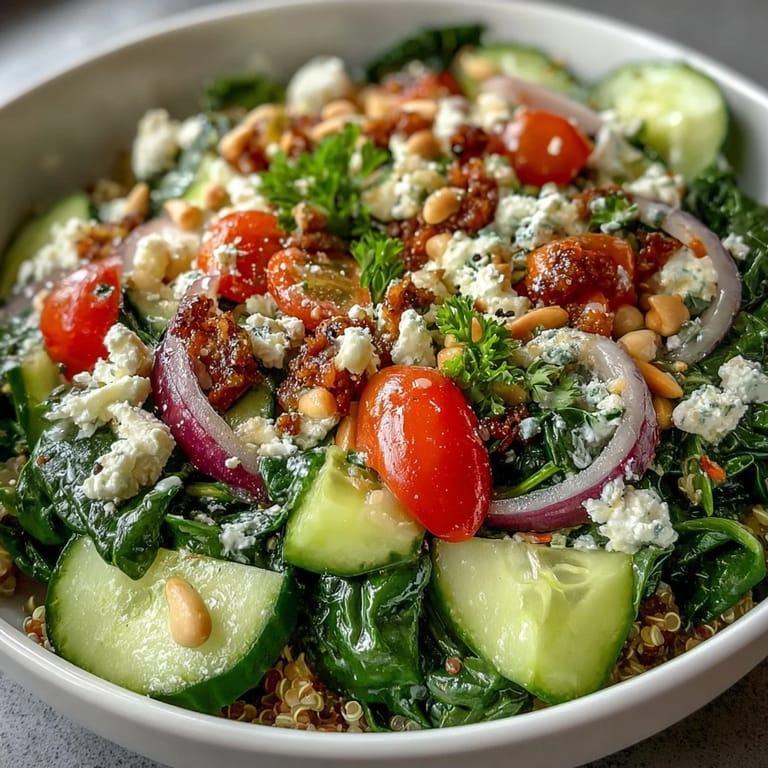
Save This bowl has become my answer to so many kitchen questions—what to make on a Tuesday, how to use up vegetables before they spoil, how to eat something that feels nourishing and complete without overthinking it. Make it once, and you'll understand why it's become something I reach for again and again.
Recipe FAQs
- → What grains work best in this bowl?
Quinoa and brown rice are excellent options, but you can also use farro, bulgur, or couscous depending on your preference and cooking time available.
- → Can I make this ahead of time?
Yes, this bowl is perfect for meal prep. Cook the grains and sauté the spinach in advance, then assemble when ready. Store components separately and add dressing just before serving.
- → How do I add more protein?
Try adding cooked chickpeas, grilled chicken, or hard-boiled eggs. The feta already provides some protein, but legumes or meat make it more substantial.
- → What can I substitute for feta?
Goat cheese, halloumi, or cotija work well as alternatives. For a dairy-free version, try tofu feta or simply omit the cheese and add extra nuts or seeds.
- → Is this served warm or cold?
This bowl is versatile and delicious served warm, at room temperature, or chilled. It's perfect for packed lunches or quick dinners any time of year.